
4
Deconstructivism is one of the most visually striking and intellectually provocative movements in modern architecture. Known for fragmentation, distortion, and controlled chaos, it challenges traditional ideas of harmony, symmetry, and order.
Instead of clean lines and predictable forms, deconstructivist buildings often look as though they’ve been pulled apart, twisted, or reassembled in unexpected ways. But beneath the dramatic exteriors lies a serious philosophical foundation.
What Is Deconstructivism?
Deconstructivism emerged in the late 20th century, heavily influenced by the philosophical theory of “deconstruction,” developed by French philosopher Jacques Derrida. In architecture, this translated into:
- Fragmented forms
- Non-linear design
- Unpredictable geometry
- Asymmetry
- Visual tension
- Controlled structural chaos
Rather than following classical rules of proportion and balance, deconstructivist architects intentionally disrupt them.
Historical Background
The movement gained international attention after the 1988 exhibition “Deconstructivist Architecture” at the Museum of Modern Art (MoMA) in New York.
Curated by Philip Johnson and Mark Wigley, the exhibition featured architects who were redefining the built environment. These included:
- Frank Gehry
- Zaha Hadid
- Daniel Libeskind
- Rem Koolhaas
- Bernard Tschumi
- Peter Eisenman
While they did not necessarily identify themselves as a unified group, their work shared a commitment to disruption and experimentation.
Key Characteristics of Deconstructivist Architecture
1. Fragmentation
Buildings appear broken into pieces or assembled from independent parts. Surfaces intersect at unusual angles.
2. Distortion of Structure
Traditional structural logic is visually challenged. Walls tilt. Rooflines shift. Columns may not appear where you expect them.
3. Dynamic Forms
Curves, slants, folds, and warped planes create movement and energy.
4. Unpredictable Geometry
Instead of rectangles and symmetry, deconstructivist buildings use irregular shapes and complex geometries.
Iconic Examples
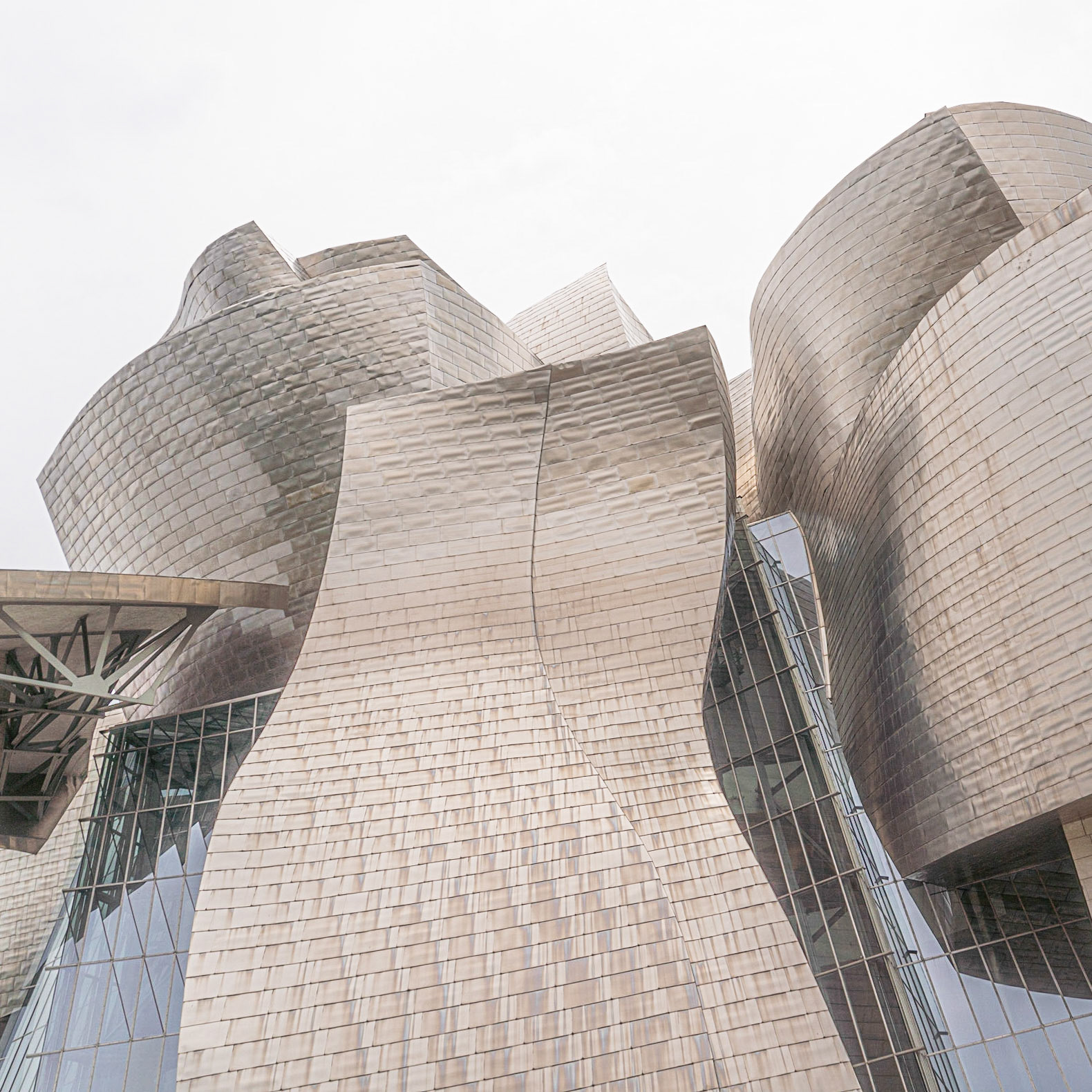
Guggenheim Museum Bilbao – Frank Gehry
4
Completed in 1997, this titanium-clad structure is a landmark of deconstructivism. Its flowing, sculptural forms transformed Bilbao into a global cultural destination — a phenomenon now known as the “Bilbao Effect.”
Walt Disney Concert Hall – Frank Gehry
4
With its sweeping stainless steel panels, the building feels almost in motion. The dramatic exterior contrasts with an acoustically refined interior.
Vitra Fire Station – Zaha Hadid
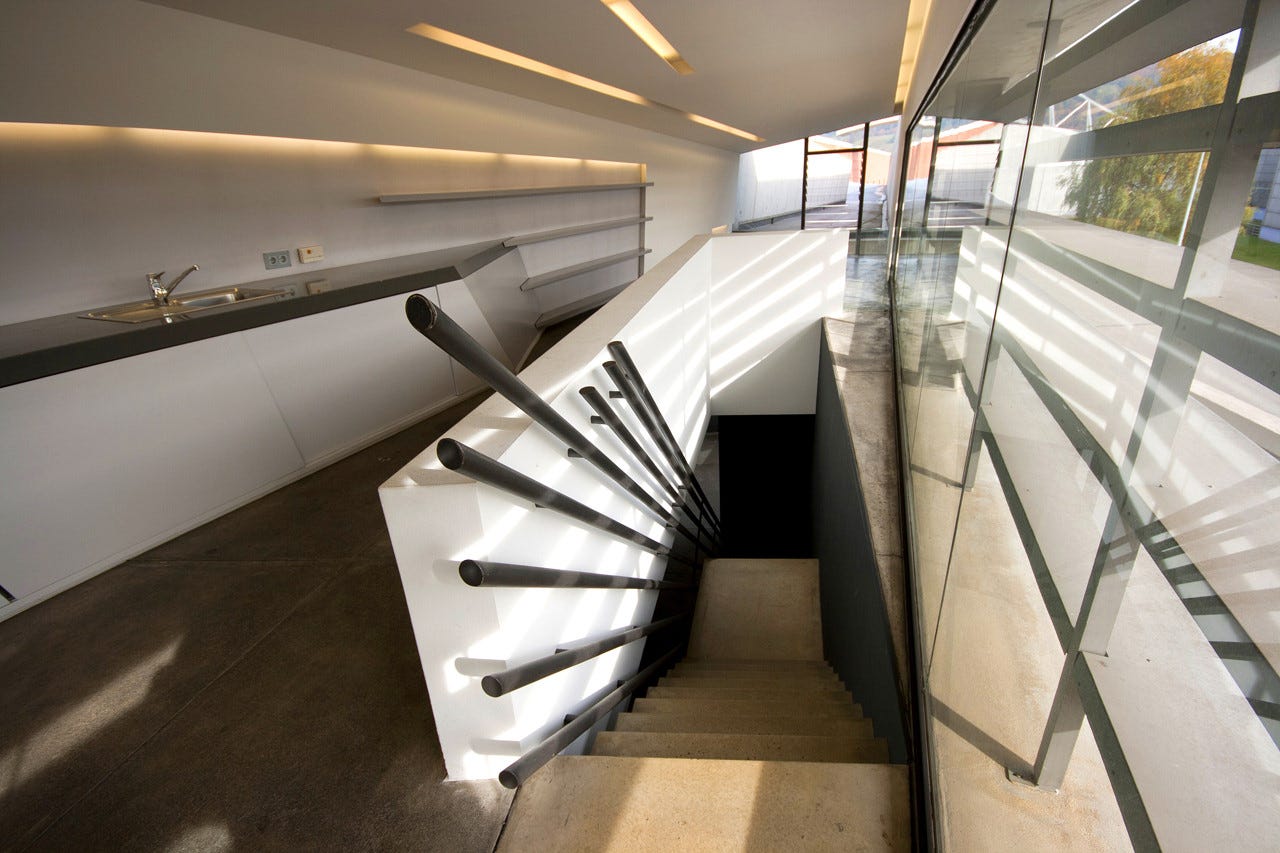
This early work by Hadid is defined by sharp angles and stretched concrete planes that create tension and movement.
Deconstructivism vs. Modernism
| Modernism | Deconstructivism |
|---|---|
| Clean lines | Fragmented forms |
| Functional simplicity | Expressive complexity |
| Symmetry & order | Asymmetry & tension |
| “Form follows function” | “Form challenges function” |
Where modernism seeks clarity and rational structure, deconstructivism embraces ambiguity and visual instability.
Why Deconstructivism Matters
Deconstructivism reshaped architecture by:
- Pushing structural engineering to new limits
- Encouraging digital design experimentation
- Blending architecture with sculpture
- Challenging how we emotionally experience space
It invites people to question what a building should look like.
Criticism of Deconstructivism
Despite its innovation, critics argue that:
- It can prioritize spectacle over functionality
- Construction costs are often extremely high
- Some buildings are difficult to maintain
- Forms may feel disconnected from context
Yet even critics acknowledge its lasting impact on contemporary design.
Final Thoughts
Deconstructivism is more than chaotic architecture. It is a deliberate rebellion against convention — an exploration of tension, fragmentation, and complexity.
By breaking apart traditional rules, deconstructivist architects created a new architectural language that continues to influence design today.
Whether admired or debated, deconstructivism reminds us that architecture can be both intellectual and emotional — structured yet unstable, rational yet poetic.